
 University of Campinas
  Geosciences Institute
Save the date / Call for papers
A revista Terræ publica simultaneamente as edições online de 2016 e 2017. As edições impressas acham-se temporariamente suspensas, pois os editores reconhecem que a internet oferece formas mais eficazes para disseminar rapidamente os resultados das pesquisas. As reformulações do periódico objetivam ampliar a abrangência, combinando redução de custos com rapidez de publicação. Cada vez mais a revista consolida a tendência de cobrir temas multidisciplinares que revelem formas de interação das Geociências com as diferentes áreas do conhecimento humano. A edição de Terræ 2017 é inteiramente dedicada ao tema GEOPARQUES.
A revista aceita trabalhos e comunicações em Português, Inglês e Espanhol.
Chamada de trabalhos / CALL FOR PAPERS
Uma vez recuperado o tempo de ausência na web, a edição de Terræ 2018 tornar-se-á uma boa opção para publicação de artigos científicos. O volume deverá reunir contribuições referentes a GEOÉTICA, tema que permite acomodar abordagens diferenciadas que revelem as inter-relações entre a sociedade e os ecossistemas terrestres.
O sistema de submissão e avaliação de artigos científicos está em pleno funcionamento, sendo feito exclusivamente pelo E-mail: terrae@ige.unicamp.br. Nosso sítio web está à sua disposição.
Esperamos sua visita e participação!
Os editores.
10/01/2018- 16:31 pm
Chamada de trabalhos/ Call for papers para o Volume 15, 2018
Novas contribuições são aceitas para o volume 2018 de Terræ.
Data limite 30.abril.2018
10/01/2018- 16:31 pm
Chamada de trabalhos/ Call for papers para os eventos:
VIII GeoSciEd 2018 – the 8th Quadrennial Conference of the
International Geoscience Education Organisation (IGEO)
– Geosciences for Everyone –
VIII Simpósio Nacional de Ensino e História de
Ciências da Terra / EnsinoGEO-2018
– Geociências para Todos –
Campinas – Sao Paulo – Brazil, July 2018
Acesse o site: http://www.ige.unicamp.br/geoscied2018/en/.
Data limite 11.fevereiro.2018
11/01/2018- 13:40 pm
Livro "Geologia do Brasil”, 2012: Reserve já seu exemplar, sem despesas de remessa.
Visite o endereço eletrônico: www.editorabeca.com.br
Os editores
Campinas, janeiro de 2018.
Meltdown in the North
David Shepherd
Institute of Geosciences
University of Campinas - UNICAMP
Scientific American, October 2003.
www.sciam.com
The cooperation between scientists of different fields and the measurements they have made over the last decades has painted a disturbing picture of climate change in the Arctic: summer temperatures at their highest level in 400 years, and the lengthening of the snow-free season in the Arctic by several days per decade.
Some of the effects of climate change are also becoming apparent, as glaciers shrink at a rate 3 times larger today than they did 10 years ago. Permafrost is thawing, which has lead to an increase in the discharge of fresh water into the Arctic Basin from Russian rivers (studies of the paleo-record indicate that dramatic changes in global ocean circulation, and therefore climate, would happen if the outflow of water from the Arctic Basin became fresher than a certain level). The warmer weather has encouraged the spreading of vegetation, altering the local carbon cycle. Most strikingly, the area covered by ice has decreased by 3% per decade since satellite surveying began in 1972, and the thickness of the ice coverage has decreased as much as 40% in the last decades.
Since in the global climatic system the Arctic receives heat transferred from equatorial regions, climate change in the Arctic is without question connected to climate change on a global level. However, due to the complex nature of the processes (and their interactions) that govern climate in the Arctic, it is not known whether the warming of the Arctic can be attributed to natural warming following the Little Ice Age which ended around 1850 or to man made Greenhouse Warming. An effort to coordinate research efforts by federal agencies in countries around the Arctic has lead to the creation of SEARCH (Study of Environmental Arctic Change), which has already made discoveries concerning patterns of wind circulation in the Arctic. Hopefully, enough will be discovered to elucidate the causes of Arctic warming, and predict the consequences for the Arctic and the world.
Volume 14, 1-2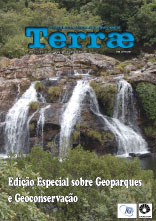
Volume 13, 1-2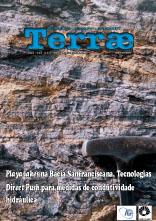
Volume 12, 1-2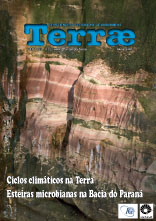
Volume 11, 1-2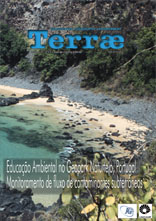
Volume 10, 1-2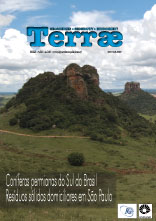
Volume 9, 1-2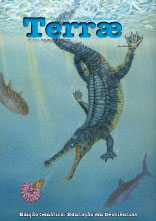
Volume 8, 1-2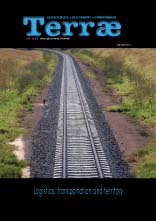
Volume 7, 1-2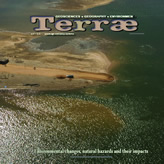
Volume 6, 1-2
Volume 3,4,5
Volume 2
Volume 1
A PDF reader is required to view the article files. Make the download here: Adobe Acrobat or Foxi